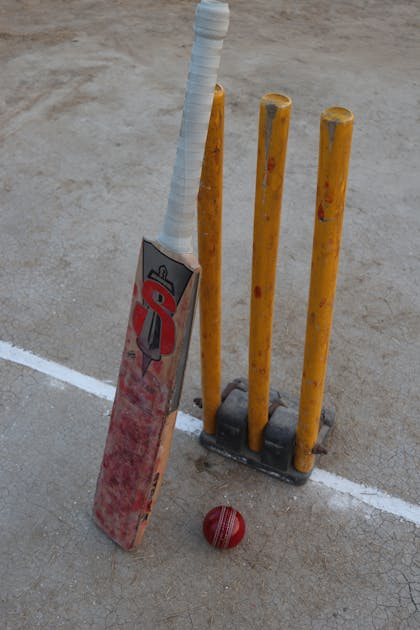
All 11 Ways to Get Out in Cricket
Have you ever stopped to think about just how many ways you can lose your wicket in cricket? Most of us, even those who have grown up with the game, can rattle off maybe four or five. Bowled, caught, LBW, run out, stumped. But here's the thing: cricket has 11 distinct ways a batsman can be given out. Eleven! And some of them are so wonderfully bizarre that even the commentators have to pause and reach for the rulebook when they happen.
So come, let us walk through all of them together. From the everyday joy of stumps cartwheeling to the once-in-a-generation oddities that make you say, "Wait, that's actually a rule?" Pour yourself a chai. This is going to be fun.
1. Bowled
There is nothing, and I mean nothing, quite as satisfying in cricket as the sight of stumps flying. The bowler sends one down, it beats the bat or deflects off bat or body, and crashes into the stumps hard enough to dislodge at least one bail. The moment that bail tumbles off, the batsman is done. Time to walk back.
The bowler always gets credit for this one, and rightly so. You cannot be bowled off a no-ball or a free hit, so the bowler has to earn it off a legitimate delivery. And earn it they do. This is one of the three most frequent dismissals in all formats of the game.
Now, do you remember Shane Warne's "Ball of the Century" to Mike Gatting in the 1993 Ashes? It pitched well outside leg stump, spun viciously across the right-hander, and just kissed the off bail. Gatting stood there, frozen, staring at the pitch as if it owed him an explanation. You could almost read the word "how?" on his face. That, my friends, is the bowled dismissal at its most glorious.
2. Caught
The batsman hits the ball, or it deflects off the glove or any part of the bat, and a fielder catches it before it touches the ground. It could be the wicketkeeper, a fielder diving at deep midwicket, or even the bowler himself in his follow-through. If someone on the fielding side holds on to it cleanly, you are walking back.
The bowler gets credit here too. And if the bowler takes the catch himself? It goes down as "caught and bowled" (c&b), which always feels like a double triumph. You cannot be caught off a no-ball or a free hit, so there is that small mercy for batsmen. This is, across all formats, the single most common way to lose your wicket. We have all seen thousands of them, and yet a truly great catch still makes you leap out of your chair.
Think of Jonty Rhodes. That man turned fielding into an art form, didn't he? His diving catch to dismiss Brian Lara in the 2003 World Cup still gets replayed, and it still makes you gasp. Some catches just stay with you forever.
3. LBW (Leg Before Wicket)
If there is one dismissal that starts more arguments than any other in cricket, it is this one. The ball hits the batsman's body, usually the pads, without first touching the bat, and the umpire decides it would have gone on to hit the stumps. But here's where it gets complicated, because several conditions need to be met.
The ball must pitch in line with the stumps or on the off side, unless the batsman is not attempting a shot, in which case it can pitch anywhere. It must hit the batsman in line with the stumps, again with the same exception for when no shot is offered. And it must be judged to be going on to hit the stumps. That is a lot for an umpire to process in a split second, which is exactly why this dismissal has always been a source of heated debate.
The bowler gets credit, and it cannot happen on a no-ball or a free hit. It is the second or third most common way to get out in most formats. But here is what I find fascinating: DRS changed everything about LBW. Since its introduction, umpires have become noticeably more accurate. And batsmen? They stopped using their pads as a second line of defence, because they knew the review would catch them out. Technology changed behaviour. Isn't that remarkable?
4. Run Out
This one is pure theatre. While the batsmen are running between wickets, or sometimes just backing up a little too eagerly at the non-striker's end, a fielder breaks the stumps with the ball before the batsman has made their ground. You need your bat or some part of your body grounded behind the crease line. If you haven't made it, you are gone.
Now, here is what makes the run out unique. The bowler gets no credit for it. It is all about the fielding side's brilliance. And unlike most dismissals, you can be run out off a no-ball, and you can be run out on a free hit delivery too. It is one of the very few dismissals that remains live in almost every situation. In limited-overs cricket, where batsmen push for quick singles, run outs are a constant threat.
And then there is that 2019 World Cup Final. England versus New Zealand. A Super Over. A boundary count. But the moment we all remember? That final-over deflection off Ben Stokes' bat that raced to the boundary for overthrows, awarding England six runs instead of one. It changed cricket history. And honestly, we are still debating it.
5. Stumped
Picture this. A batsman dances down the wicket to a spinner, eyes full of intent, looking to launch the ball into the stands. They miss. And before they can scramble back, the wicketkeeper has whipped off the bails. Gone. The crucial difference from a run out is that the batsman is not attempting a run. They simply left the crease to play the ball and got beaten.
The bowler gets credit for a stumping, which makes sense because the delivery itself drew the batsman out. You cannot be stumped off a no-ball, though you can be run out, so the keeper has to be sharp about which law applies. Stumpings are moderately common, especially on subcontinental pitches where spin bowling dominates and batsmen are constantly trying to get to the pitch of the ball.
And then there is MS Dhoni, who holds the record for the most stumpings in ODI cricket. Nobody else is even close. His glovework was so impossibly fast that "Dhoni-speed stumping" became its own category. You would blink, and the bails were already off. The batsman would still be looking at the spot where the ball pitched. Pure genius behind the stumps.
6. Hit Wicket
This, I must say, is the embarrassing one. The batsman accidentally breaks their own stumps while playing a shot or setting off for a run. It could be the bat dragging back, the body stumbling, even a helmet tumbling off and landing on the stumps. If it happens during the delivery or while taking off for the first run, you are out. And yes, you have to make that lonely walk back knowing you did it entirely to yourself.
The bowler gets credit for a hit wicket, which always feels a little generous, doesn't it? They did not really do much except deliver the ball. It cannot happen on a no-ball or a free hit, and it is uncommon enough that it only surfaces a few times a year in international cricket.
Steve Waugh was once dismissed hit wicket when his helmet fell off and landed on the stumps. Can you imagine the look on his face? Modern helmets with better chin straps have made that particular variation rarer, but batsmen still occasionally tread on their stumps while pulling or hooking. There is no lonelier walk back than the hit wicket walk.
7. Handled the Ball
Now we enter the realm of the truly rare. A batsman deliberately uses the hand not holding the bat to touch the ball while it is in play, without the fielding side's permission. If a fielder asks you to pick the ball up and hand it over, that is perfectly fine. It only becomes a dismissal if you do it without being asked or to gain an unfair advantage.
The bowler gets no credit for this one. It can happen on a no-ball, but not on a free hit under the current Laws, since this dismissal has been merged with obstructing the field. And it is extremely rare.
Important note: As of the 2017 revision of the Laws of Cricket, "handled the ball" has been merged into "obstructing the field." It is no longer a separate mode of dismissal under the Laws, though the ICC continued to record it separately in some contexts. For historical completeness, it remains one of the 11 traditional ways to get out.
Michael Vaughan fell to this in a Test against India in 2001. He instinctively knocked the ball away from his stumps with his hand after playing a defensive shot. Pure reflex. But it cost him his wicket. Sometimes your instincts, the very ones that make you a good cricketer, end up betraying you.
8. Obstructing the Field
Have you ever seen a batsman deliberately get in the way of a fielder trying to field the ball or take a catch? That is obstruction, and it is a dismissal. This includes physically blocking a throw, deliberately running in a fielder's path, or, since 2017, handling the ball without permission.
No bowler credit here. It can happen on a no-ball, and interestingly, it is one of the very few dismissals that is valid even on a free hit delivery. In its traditional form, it is extremely rare. Slightly less so now that handled-the-ball incidents fall under the same umbrella.
In a 2011 ODI between England and Bangladesh, Shakib Al Hasan gestured at the ball while running between the wickets. The umpire gave him out. A huge debate followed, as you can imagine. But here is the truth: the spirit of cricket usually means fielding sides withdraw such appeals. This is one of those laws that exists more as a deterrent, a line in the sand, than something you genuinely expect to see enforced at the top level.
9. Hit the Ball Twice
A batsman deliberately hits the ball a second time, unless they are doing so purely to protect their wicket. So if the ball is rolling back towards the stumps after your initial shot, you can knock it away. That is fine. But if you hit it again to score runs or gain any other advantage, you are out.
The bowler gets no credit. It can happen on a no-ball but not on a free hit. And here is the remarkable thing: this has never happened in the history of men's international cricket. Not once. It crops up occasionally in club and domestic games, but at the highest level? Zero. The reason is simple. Most second contacts with the ball are defensive, and those are perfectly legal. You would have to do something genuinely foolish to get out this way.
10. Timed Out
When a wicket falls, the incoming batsman must be ready to face, or be at the crease with their partner ready, within a set time limit. Under the 2022 playing conditions, this was reduced to 2 minutes in Test cricket, down from the previous three minutes. Limited-overs formats are typically even stricter. If the batsman does not make it in time and the fielding side appeals, the umpire gives them out.
No bowler credit, and the question of no-balls and free hits does not even apply since no delivery is bowled. This is, without question, one of the rarest dismissals in cricket. It had happened only once in men's international cricket.
And what a story that one time was. Angelo Mathews of Sri Lanka, walking out during the 2023 World Cup against Bangladesh, had his helmet strap break. He tried to fix it. Could not get it done in time. Bangladesh appealed. The umpire upheld it. The first timed-out dismissal in men's international cricket, and it happened because of a broken chin strap. The debate about sportsmanship versus gamesmanship raged for weeks afterwards. But then, cricket has always loved a good controversy, hasn't it?
11. Retired Out
A batsman voluntarily walks off the field without being injured or ill. Unlike "retired hurt," where you can come back later, a batsman who retires out cannot return unless the opposing captain gives permission. It counts as a wicket for the batting side.
No bowler is credited. The questions about no-balls and free hits do not apply because it is a voluntary action, not tied to any delivery. Historically, it has been rare in professional cricket, though it has become noticeably more common in T20 franchise leagues as a tactical option.
And this, I think, is where you see cricket's evolution most beautifully. In T20 leagues like the IPL, retiring out has gone from being considered unsporting to being called smart captaincy. A well-set batsman who has slowed down walks off to let a bigger hitter come in during the death overs. What was once an oddity is now a genuine strategic weapon. The game keeps reinventing itself, and that is one of the things I love most about it.
Summary Table
| Dismissal Type | Bowler Credited? | Can happen on No-Ball? | Can happen on Free Hit? | Rarity |
|---|---|---|---|---|
| Bowled | Yes | No | No | Very Common |
| Caught | Yes | No | No | Very Common |
| LBW | Yes | No | No | Common |
| Run Out | No | Yes | Yes | Common |
| Stumped | Yes | No | No | Moderately Common |
| Hit Wicket | Yes | No | No | Uncommon |
| Handled the Ball | No | Yes | No | Extremely Rare |
| Obstructing the Field | No | Yes | Yes | Extremely Rare |
| Hit the Ball Twice | No | Yes | No | Extremely Rare |
| Timed Out | No | N/A | N/A | Extremely Rare |
| Retired Out | No | N/A | N/A | Rare |
What Should You Take Away from All This?
If you remember just a few things from this list, let it be these. Only five dismissals credit the bowler: Bowled, Caught, LBW, Stumped, and Hit Wicket. Those are the ones that show up in a bowler's wicket tally, and they are the ones bowlers dream about at night.
Run out and obstructing the field are the only two dismissals that can happen on a free hit delivery. That is worth knowing, because it explains why batsmen feel so free to swing on a free hit, and why you occasionally see a sharp run out even when the batter seems safe from everything else.
No-ball protection is more significant than most people realise. A batsman cannot be bowled, caught, given LBW, stumped, or hit wicket off a no-ball. Only run out, obstructing the field, handling the ball, and hitting the ball twice remain possible. It is a serious shield for the batter.
The 2017 Law changes merged "handled the ball" into "obstructing the field," technically bringing the count down to 10. But the original 11 remain part of cricket's rich history and are still widely referenced. And retired out, once considered an oddity, is gaining real tactical legitimacy in T20 cricket.
There you have it. All 11 ways the umpire can raise that finger. Whether you are a scorer keeping track of every wicket, a player looking to sharpen your knowledge, or simply a fan who wants to know exactly what happened when the umpire's finger goes up, you now have the complete picture. And the next time one of those rare dismissals pops up on your screen, you will be the one explaining it to everyone else in the room.