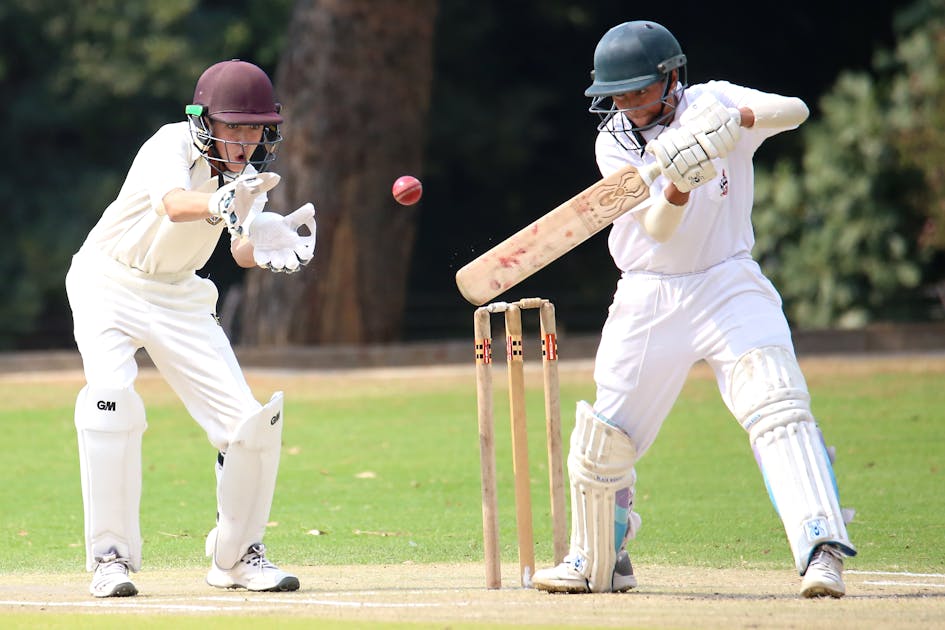
How to Build a Cricket Practice Routine That Actually Works
Let me ask you something. When was the last time you walked into nets with a proper plan? Not just "I will bat for a bit and bowl a few," but an actual, written-down plan with goals and a structure? If you are like most club cricketers I have met over the years, the answer is probably never. And look, I am not judging. We have all been there. You show up, pad up, smack a few through the covers, bowl an over or two, and head home feeling like you have done the work. But here is the thing: you have not really done the work. You have just gone through the motions.
The difference between players who keep getting better and players who stay at the same level year after year is not talent. It is structure. And the beautiful part? You do not need a state-of-the-art academy or a personal coach to build a practice routine that actually moves your game forward. You just need a framework. So let us build one together.
Why Structured Practice Beats Random Nets
I will tell you why random nets feel so deceptive. You are hitting balls. You are sweating. You are tired at the end. It feels productive. But think about what you actually did. You probably faced deliveries in your comfort zone, played your favourite shots, and avoided everything that makes you uncomfortable. You basically practised being the player you already are.
Structured practice flips that on its head. It forces you to spend time on the stuff that gets you out, to simulate the pressure you feel on match day, and to actually measure whether you are improving or just treading water. Sports science has been telling us this for decades: deliberate practice, where you work just beyond your current ability with immediate feedback, produces far greater improvement than simply piling up hours in the nets.
Think about it this way. A batsman who faces 200 throwdowns aimed at off stump while working specifically on leaving the ball will develop better judgement in one session than someone who bats for an hour smashing anything loose through the covers. One is practice. The other is entertainment.
The 4 Pillars of Cricket Practice
A complete practice framework rests on four pillars. Neglect any one of them and your game will always have a ceiling. Let me walk you through each one.
1. Technical
This is what most of us think of when we hear the word "practice," right? Batting technique, bowling action, fielding mechanics. Your grip, your stance, your backlift, your footwork, your seam position, your release point, your catching technique. The nuts and bolts of the game. The key here is that technical work is best done at lower intensity with lots of repetition. You want correct movement patterns to become so automatic that you do not have to think about them when the pressure is on.
2. Tactical
Now here is where it gets interesting. Knowing how to play a cover drive is technical. Knowing when to play it? That is tactical. And we do not spend nearly enough time on this. Shot selection, field awareness, bowling plans, reading the match situation, adapting to conditions. These are the skills that separate a good net batsman from a good match batsman. Scenario-based drills and match simulations are your best friends here.
3. Physical
Cricket is a deceptively demanding sport. You need short explosive bursts for running between wickets, diving in the field, and the bowling delivery stride, all layered on top of hours of sustained concentration. Your fitness work should target speed, agility, core stability, and the health of your shoulders and knees. An injury-free season is, in many ways, a successful season.
4. Mental
Have you ever wondered why some players crumble under pressure while others seem to thrive? It is not magic. It is training. Handling pressure, recovering from a poor shot, maintaining concentration over a long spell, backing yourself after a string of low scores: these are all trainable skills. Visualisation, breathing routines, and pressure drills in practice all contribute to the mental resilience that shows up on match day.
Batting Drills
Shadow Batting
I know what you are thinking. "Shadow batting? Really?" Yes, really. It is underrated precisely because it feels too simple. But here is what it does for you. Stand at the crease without a ball and play through your shots with full commitment to footwork and balance. Focus on one shot at a time: ten front-foot drives, ten back-foot punches, ten leaves. Record yourself on your phone and check your head position and balance at the point of contact. You will be surprised by what you see.
Do this for ten minutes before every net session. It primes your muscle memory and helps you spot technical issues before a single ball is bowled. Think of it as tuning an instrument before a concert.
Throwdowns
Throwdowns are wonderful because they let you face a high volume of deliveries in a short time and target exactly the areas you want to work on. Have your partner aim at a consistent line and length while you focus on a particular shot or movement. You could work on front-foot drives with full-length deliveries on off stump, concentrating on getting that front foot to the pitch of the ball and presenting the full face. Or back-foot punches against deliveries short of a length outside off, rocking back and hitting through the line. For playing spin, ask for slow, flighted throwdowns with turn and work on using your feet or going deep in the crease. And here is one most people skip: practise leaving. Mix good-length balls outside off with the occasional one on the stumps. The goal is judgement, not runs.
Scenario Nets
This is my favourite. This is where tactical practice meets batting, and honestly, I wish every club in the country did more of this. Before you walk into the net, set up a match situation. You are 30 for 3 in the tenth over and need to rebuild. Or you need 45 off the last five overs in a T20. Now bat accordingly. Have the bowlers bowl to a plan. Keep score. This trains decision-making under context, which is infinitely more valuable than hitting balls in a vacuum.
Rotate through different scenarios each week. Batting first on a green pitch. Chasing a big total. Surviving a hostile spell. Accelerating in the middle overs. Each one teaches you something different about your own game.
Bowling Drills
Target Bowling
Place a target, a cone, a shoe, even a towel, on a good length just outside off stump. Bowl six-ball overs and count how many hit the target zone. Track your accuracy percentage over weeks. I genuinely believe this is the single most effective bowling drill in cricket, because line and length win more matches than pace or turn ever will. You can be bowling at 130 clicks, but if you are all over the place, a decent club batsman will take you apart.
Once you get comfortable, move the target to leg stump for inswingers, place it shorter for bouncers, or set two targets and practice alternating between lines.
Rhythm Runs
Have you noticed how your bowling action falls apart when you are tired or under pressure? We all have. Rhythm runs are the fix. Mark out your full run-up and bowl at about 70 percent pace, focusing entirely on a smooth, repeatable action. Feel the gather, the load-up, the release, and the follow-through as one connected, flowing movement. Bowl two or three overs like this before ramping up to full intensity. It is like a musician playing scales before a performance.
Variations Practice
Here is a mistake I see all the time. Bowlers toss in a slower ball or a googly randomly during a spell, it does not come out right, and they lose confidence in it. The better approach is to dedicate entire sessions to your variations. If you are a seam bowler, spend a whole session on your slower ball: grip, release, disguise. If you are a spinner, work on one variation at a time. Bowl ten of the same delivery in a row, then ten more. Repetition builds confidence and control, and that is what makes a variation actually work in a match.
Once you have control, then practice setting up the variation. Bowl four stock balls followed by the variation and see if a batting partner picks it. That is when it gets fun.
Fielding Drills
Catching
You know what wins close matches? Catches. And yet fielding practice is the first thing we skip. Your catching drills should cover all positions in a structured rotation. For slip catching, stand at regulation distance and take catches from a bat or cradle, starting at waist-height and working outward to diving catches. Aim for at least twenty catches per session. For high catches, use a throw or bowling machine to launch the ball skyward, and practice calling, positioning, and watching it into your hands. Get outdoors so you learn to deal with sun and wind. For close-in catching at short leg or silly point, use a close-range feed from a bat. Here, reaction speed matters more than textbook technique.
Ground Fielding
Set up a channel drill with two cones about three metres apart and have balls fed at varying speeds along the ground. Field, gather, and return in one smooth movement. Practice both sides. Then move to an attack-the-ball drill where you charge in, pick up cleanly on the move, and throw at a single stump. The players who do this well, players like a Jadeja or a Ponting in their prime, make fielding look effortless. But that effortlessness comes from hours of this kind of repetition.
Throwing Accuracy
Set up a single stump from 20, 30, and 40 metres. Take ten throws from each distance and track your hit rate. Work on flat, accurate throws rather than high, looping ones. Practice throwing from different body positions: side-on, off-balance, after picking up on the run. Consistent accuracy from the outfield saves far more runs than a strong arm with poor aim. Remember, the best throw in the world is useless if it misses the stumps by three feet.
Fitness for Cricket
Running Between Wickets
We do not talk about this enough. Sprint speed over 17 to 22 metres is the most relevant distance for cricket running. Practice standing starts over 20 metres, turning and sprinting back to simulate a quick two, and three-run efforts with turns at each end. Time yourself and aim to improve. Quick singles win matches at every level. I have seen so many games decided by the team that ran harder between the wickets.
Core Strength
A strong core stabilises your body through the bowling action and batting shots, reducing injury risk and improving power transfer. Focus on planks, side planks, dead bugs, bird dogs, and rotational exercises like cable woodchops or medicine ball throws. Three sessions of fifteen minutes per week makes a noticeable difference within a month. That is not a big time investment for a significant return.
Shoulder Health
Shoulder injuries from throwing and bowling are incredibly common, and the frustrating part is that most of them are preventable. Include band work for external and internal rotation, scapular stability exercises like wall slides and prone Ys, and regular stretching of the chest and lats. Do this as a warm-up before every session, not just when something starts to feel sore. Prevention is always better than sitting out half the season with a dodgy shoulder.
As a general guideline, two or three gym sessions per week focusing on compound movements like squats, deadlifts, pull-ups, and pressing, combined with cricket-specific mobility work, will cover most players' needs without overcomplicating things.
Sample Weekly Schedule (3 Days)
Here is a realistic three-day schedule for a club cricketer. Adjust the durations based on your available time, but try to keep the structure.
Day 1: Technical Focus (90 minutes)
Start with ten minutes of shadow batting to warm up. Then spend twenty minutes on throwdowns with a specific shot focus, followed by twenty minutes of bowling target practice, four to five overs at a controlled pace. Give fifteen minutes to slip catching and high catches, another fifteen to a core and shoulder prehab circuit, and wrap up with ten minutes of cool-down and stretching.
Day 2: Match Simulation (90 minutes)
Begin with ten minutes of dynamic warm-up and a quick fielding drill. Then the main event: thirty minutes of scenario nets where batsmen and bowlers are given a match situation to play out. Follow that with twenty minutes of ground fielding and throwing accuracy work, twenty minutes of running between wickets sprints and agility ladder, and a ten-minute cool-down.
Day 3: Strength and Skills (75 minutes)
Hit the gym for thirty minutes with squats, deadlifts, pull-ups, pressing, and core work. Then fifteen minutes of bowling rhythm runs where you focus on action rather than pace, fifteen minutes of variations practice or spin work, and fifteen minutes of a catching circuit covering all positions in rapid rotation.
On match weekends, drop Day 3 or reduce its intensity. The goal is to arrive at the match fresh, not fatigued. You want to feel like you are ready to play, not recovering from training.
Practicing Alone vs With a Team
Solo Practice
Do not underestimate what you can achieve on your own. Shadow batting, fitness work, throwing at a stump, core routines, visualisation: none of these require a partner. A ball on a string hung from a tree or doorframe gives you something to drive against for timing. A rebounder net lets you practice catching and ground fielding alone. And if you have access to a bowling machine, solo net sessions become incredibly productive because you can set the line, length, and speed precisely and get through a huge volume of balls.
Partner Practice
A single committed training partner unlocks throwdowns, catching drills, and basic bowling practice. And honestly, this is where most club cricketers can make the biggest gains. Even two sessions a week with someone who shows up reliably will improve your game faster than occasional team nets where you get fifteen minutes with the bat and call it a day.
Team Practice
Team sessions are best used for things you simply cannot do alone: scenario nets with real bowlers, fielding drills that require multiple players, centre-wicket practice, and match simulation. Use team time for tactical and competitive work. Save your technical repetition for solo and partner sessions where you control the pace and the focus.
Tracking Improvement Over Time
Here is something I have always believed: what gets measured gets managed. Keep a simple training log. It does not need to be fancy. Track your bowling accuracy as a percentage of balls hitting the target zone each session. Track your catching success rate, catches taken versus dropped, by position. Note your sprint times over 20 metres and your two-run turn times. Record fitness benchmarks like plank hold time, number of pull-ups, or yo-yo test score. And write down what you worked on and what felt better or worse.
Review your log monthly. Look for trends rather than obsessing over individual sessions. If your bowling accuracy has gone from 40 percent to 55 percent over six weeks, you know the target bowling drill is working. If your catching has not improved, you might need to increase the volume or change the drill entirely.
Use an app like Skipper to track your match performances alongside your training data. When you can see that your improved throwdown work is translating into higher match scores, that feedback loop keeps you motivated and focused. There is nothing quite like seeing the numbers confirm what your body is telling you.
Common Practice Mistakes
Only Batting in Nets
This is the big one. So many players treat practice as synonymous with batting. Bowling, fielding, and fitness get whatever scraps of time are left over, which is usually nothing. But here is a thought: your fielding and fitness often have a bigger impact on match outcomes than an extra fifteen minutes with the bat. A balanced routine gives each discipline its proper share of attention.
No Warm-Up
Jumping straight into full-intensity bowling or aggressive batting without warming up is asking for trouble. It invites injury and means your first few overs or shots are wasted anyway. Ten minutes of dynamic stretching, light jogging, and shadow movements prepares both your body and your mind. It is not wasted time. It is an investment in the session.
Always Practising Strengths
I understand the temptation. It feels wonderful to play cover drives when you have a gorgeous cover drive. But practice time is better spent on the areas that actually get you out. If you are weak against short-pitched bowling, spend time facing bouncers. If you leak runs on the pads, bowl to a leg-stump target. Comfort in practice does not equal improvement. In fact, it is usually the opposite.
No Match Context
Batting or bowling without a scenario strips away the decision-making that matters most in a real game. Always simulate some kind of match situation, even if it is as simple as telling yourself, "I am 15 not out and I need to survive the next two overs." That little bit of context changes everything about how you approach each ball.
Ignoring Recovery
Training hard without recovering properly leads to fatigue, injury, and burnout. Sleep, hydration, and rest days are part of the plan, not things you squeeze in around training. If you are sore, take a lighter session or focus on skills that do not stress the tired area. Your body improves during recovery, not during the session itself.
No Consistency
Three solid sessions a week for three months will always beat six sessions a week for two weeks followed by nothing. Always. Build a routine you can sustain through the season and the off-season. Small, regular deposits of effort compound into real improvement. It is like compound interest for your cricket.
Putting It All Together
A cricket practice routine does not need to be complicated. Pick three days, cover all four pillars across the week, set specific goals for each session, and track your progress. Do the boring drills that build your foundations before the flashy ones that feel rewarding. Practice the situations that get you out, not just the ones where you look good.
The players who improve year on year are not always the most talented. They are the ones who show up with a plan, do the work, and pay attention to what is actually making them better. I have seen it at every level of the game, from gully cricket to international arenas. Structure your practice, stay honest with yourself, and the results will follow. That, I can promise you.